Terracotta Brick Tile Texture Selection
Choose a terracotta brick tile texture through product definition, surface comparison, range samples, mock-ups and documented project approval.
Historical archive: product availability, standards and event information may have changed. Contact LOPO for current specifications.Terracotta brick tile texture selection should begin with two separate decisions: what product is being specified, and what surface character is wanted. A texture name or close-up photograph cannot define the full item. Format, thickness, edge condition, laying pattern, joint, color range, viewing distance, and installation context all affect the finished appearance. This guide turns LOPO’s historic texture overview into a practical process for comparing physical samples and recording an approval that can be used for a project enquiry or order.
Define the Terracotta Product Before the Texture
The phrase brick tile is used differently across markets. It may describe a thin facing unit, a brick slip, or a full-depth brick-like unit. Those products can have different dimensions, backs, edges, joint relationships, and installation methods. Begin with the intended wall build-up and drawings, then select the applicable product family.
- Use the terracotta brick overview when a brick-format masonry product is intended.
- Review thin facade brick options when the design calls for a thinner facing element.
- Consider the long brick range when an elongated module is part of the elevation concept.
Do not transfer a photographed texture from one family to another without confirmation. Tooling, body, geometry, firing, and sample scale may influence how a nominally similar surface reads.
Understand What a Texture Name Can—and Cannot—Describe
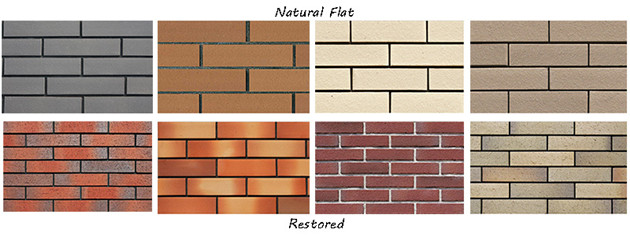
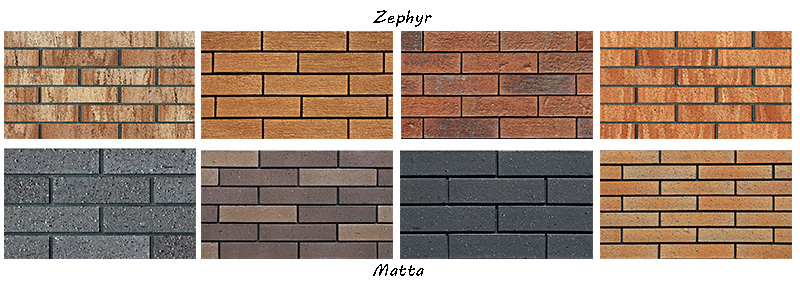
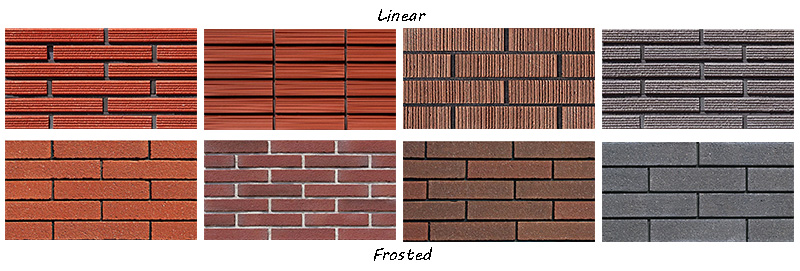
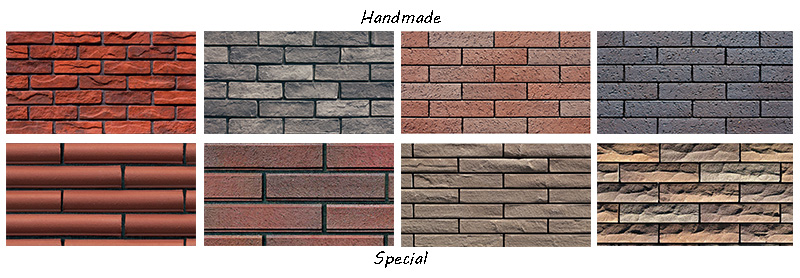
The earlier LOPO article used names including restored, natural flat, zephyr, matte, linear, frosted, handmade, and special texture. These are useful browsing labels, not universal architectural standards. A project specification should pair the name with a product code, physical reference, surface direction, acceptable variation, and dated approval record.
| Historic texture label | Visual point to examine | What to confirm on a sample |
|---|---|---|
| Natural flat or matte | Overall evenness and low-relief character | Sheen, color range, edges, and response under project lighting |
| Linear or zephyr | Direction and rhythm of grooves or fine marks | Orientation, repeat, groove scale, joints, and corner transitions |
| Restored or handmade | Irregular, aged, or hand-worked appearance | Permitted relief and tonal range across several pieces |
| Frosted or special | Distinctive grain or project-specific treatment | Current availability, production reference, and cleanable test area if relevant |
Approve a Range, Not One Isolated Piece
Terracotta is made from clay and fired, so a project team should decide how variation will be evaluated instead of expecting one small piece to represent every delivered unit. The appropriate approval scale depends on the product, finish, quantity, design intent, and contract requirements.
- Initial selection sample: use a clearly identified piece to choose the general surface and color direction.
- Range sample set: compare multiple identified pieces that show the proposed limits and typical variation. Record which faces and edges are visually important.
- Project mock-up: assemble enough units with the intended joint width, joint color, orientation, bond, corners, and lighting to judge the composition rather than a single surface.
- Signed approval: photograph and label the accepted references, but retain the physical samples as the controlling visual standard where the project documents require them.
Review Texture Under Project Conditions
A raking light can emphasize shallow relief, while diffuse light may make the same surface appear quieter. Horizontal and vertical installation can also change the reading of directional marks. Review samples upright, at the intended orientation, from both close inspection distance and a representative elevation distance. Include inside and outside corners if their texture continuity matters.
Joint design belongs in the same review. Joint width, depth, color, and pointing profile can change the apparent scale and contrast of brickwork. If more than one surface or color is proposed, establish how they will be distributed and whether mixing is random, patterned, or scheduled by elevation.
Build a Clear Texture Approval Record
| Record | Minimum information | Reason |
|---|---|---|
| Product identity | Family, item code, nominal size, thickness, and relevant edge | Prevents a surface approval from being applied to the wrong unit |
| Finish reference | Texture name or code, color code, and sample identifiers | Connects descriptive language to physical references |
| Visual limits | Accepted range pieces, orientation, important face, and viewing setup | Makes variation review more repeatable |
| Assembly context | Bond, joint dimensions, mortar color, corners, and adjacent materials | Tests the surface as part of the elevation |
| Approval status | Date, revision, approvers, comments, and retained-sample location | Reduces confusion when drawings or samples change |
Carry the Approval into Ordering and Inspection
Before production, place the approved product and finish references in the purchase documents. Confirm whether separate elevations, phases, or replacement stock need common references. Agree on labels, batch identification, sample retention, inspection timing, packing sequence, and how units should be mixed during installation. The terracotta facade brick catalogue can support initial product comparison, but the final order should follow the approved project documents and physical references.
Frequently Asked Questions
Can a texture be approved from a website image?
No image can fully communicate relief, sheen, scale, lighting response, or tonal range. Use web images to shortlist options, then review identified physical samples under relevant conditions.
Are LOPO’s texture names industry standards?
No. Names such as linear, restored, or handmade are descriptive range labels. The approved product code, sample identifiers, dimensions, and project acceptance record provide the necessary definition.
Is one sample sufficient for color and texture approval?
One piece may establish a direction, but it cannot describe distribution across an elevation. A range set and, where appropriate, a mock-up give the team more useful evidence.
Should texture be inspected before or after installation?
Define inspection stages before ordering. Teams may review references, pre-production samples, identified production pieces, and the installed mock-up according to the project’s agreed quality plan.
Request Samples for a Defined Application
Send drawings, application, product type, dimensions, quantity, target color, preferred texture, joint concept, project location, and schedule through the LOPO contact page. A precise brief makes it easier to identify suitable current samples and establish an approval path without changing the existing page URL.