Terracotta Tile Inspection Checklist: Delivery to Installation
Use this terracotta tile inspection checklist to verify delivery, labels, samples, dimensions, appearance, damage, storage and pre-installation approval.
Historical archive: product availability, standards and event information may have changed. Contact LOPO for current specifications.A terracotta tile inspection checklist should connect the delivered material to the approved product, drawings, samples, and project requirements before installation begins. It is not a maintenance guide and it does not create universal acceptance limits. The architect, consultant, contractor, installer, and supplier should agree on the inspection plan, sampling method, measuring tools, acceptance criteria, and decision authority for the specific project. This workflow covers delivery, storage, random sampling, visual and dimensional review, and release for installation.
Prepare the Inspection Basis Before Delivery
Inspection becomes unreliable when the site team has only a purchase order description or a website image. Assemble the controlling documents before the shipment arrives. Revisions should be dated and clearly identified so inspectors do not compare current production against an obsolete drawing.
- Approved product code, profile or section, nominal dimensions, finish, and intended application
- Approved physical sample or sample range, including agreed color and texture variation
- Latest tile schedule, elevation references, corner and special-piece drawings, and packing list
- Project tolerances, test requirements, inspection level, sampling method, and nonconformance process
- Specified adhesive, mechanical fixing, substrate, joint materials, or other installation interfaces
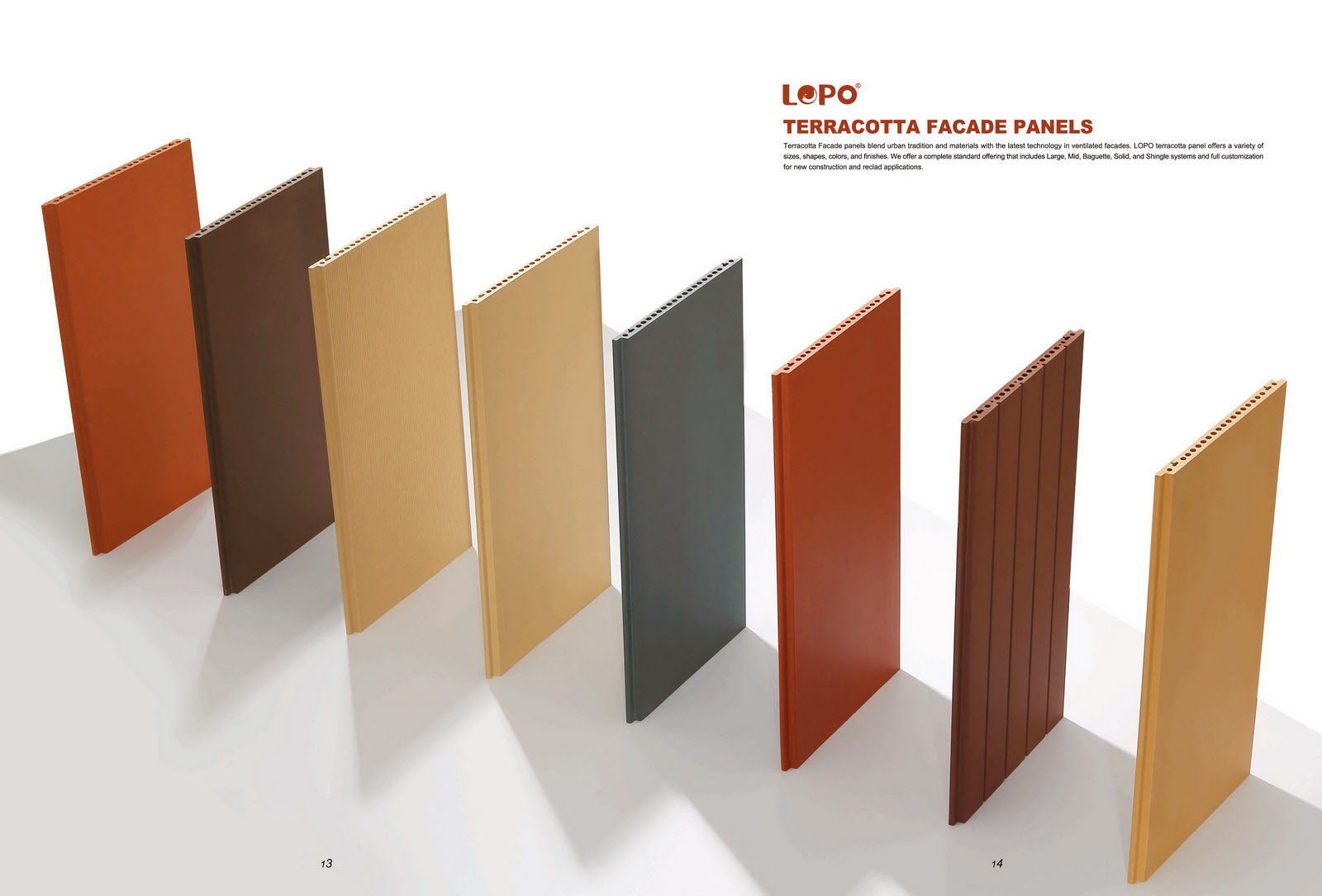
For product scope and typical applications, review the LOPO terracotta solid tile page. If the delivered units are hollow rainscreen panels rather than solid tiles, use the correct panel drawings and the terracotta facade panel information; the two products should not share assumptions or acceptance documents automatically.
Inspect the Shipment on Arrival
Record the delivery date, vehicle or container reference, purchase order, shipment documents, seal condition where applicable, and the people present. Photograph the load before unloading if visible movement, water ingress, crushed packs, broken pallets, or impact is suspected. Note reservations on the delivery record according to the project’s contractual procedure.
Use Random, Traceable Sampling
The original inspection guidance correctly emphasizes random selection from bulk production. A useful sample should represent different pallets, pack positions, labels, batches, colors, sizes, and special pieces rather than the easiest carton to open. The number of units and acceptance rules must come from the project inspection plan or referenced standard; this article does not prescribe a universal sample size.
Give each inspected unit or group a traceable reference. Record its pallet, batch or label, product code, result, photograph, and disposition. If a sample fails, follow the agreed escalation rule instead of informally choosing another unit until one passes.
Terracotta Tile Inspection Checklist
| Inspection point | How to check | Record or action |
|---|---|---|
| Identity and quantity | Compare labels, codes, pack counts, and special pieces with approved documents | Record shortages, substitutions, duplicate labels, or unidentified packs |
| Packaging condition | Review pallets, restraints, cartons, separators, edge protection, and signs of moisture or impact | Photograph damage and isolate affected packs |
| Dimensions and geometry | Use calibrated tools and the project’s defined measuring method | Compare results with approved drawings and tolerances |
| Color, glaze, and texture | Compare a representative group with the approved sample range under agreed conditions | Assess the range, not only one tile against one sample |
| Visible defects | Check faces, edges, corners, backs, fixing features, cracks, chips, contamination, and unintended marks | Classify by agreed criteria; do not invent limits on site |
| Installation interface | Dry-check representative units with joints, corners, fixings, adhesive system, or mock-up | Hold installation if fit, support, or compatibility is unresolved |
| Documents | Match required reports and certificates to the selected product and shipment | List missing, expired, unrelated, or unapproved documents |
Review Dimensions and Shape Consistently
Length, height, thickness, straightness, squareness, flatness, bow, twist, and fixing-feature geometry may matter, but the required checks depend on the product and assembly. Use the measuring method named by the project or applicable standard. Record the tool, calibration status, measurement locations, units, sample identity, and result. Measuring one tile at an arbitrary point and comparing it with an undocumented expectation is not a valid inspection.
Published technical values can support planning, but they must relate to the proposed item. The terracotta technical data verification guide explains how to check the scope of product and system information before relying on it.
Assess Appearance as a Range
Terracotta is a fired-clay material, so an approved appearance may include controlled tonal and surface variation. Compare several units together, with the agreed face orientation, lighting, viewing distance, and joint or background where practical. Glazed, printed, textured, natural-fired, and special pieces may require different reference samples.
Confirm Installation Readiness
Material release should also consider the substrate and installation system. Confirm that the work area, substrate condition, supports, anchors, rails, adhesives, joint materials, setting-out, movement provisions, drainage details, and environmental limits match the approved method. Use a representative dry layout or project mock-up to review joints, corners, transitions, fixing access, and replacement before repetitive work begins.
Quarantine and Resolve Nonconforming Material
- Stop affected material from entering installation and label its status clearly.
- Preserve pallet, batch, and product identification; do not mix units with accepted stock.
- Record the requirement, observed condition, sample method, quantity affected, photographs, and location.
- Notify the assigned parties through the project’s nonconformance procedure.
- Document the agreed disposition: acceptance, sorting, repair if approved, replacement, further inspection, or another authorized action.
LOPO’s manufacturing and quality-control page provides background on production. Site acceptance must still follow the current order, approved samples, project documents, and contractual process.
Frequently Asked Questions
How many terracotta tiles should be inspected?
Use the sample size and acceptance rules stated in the project inspection plan, contract, or applicable standard. Select units randomly across the shipment. A fixed number copied from another project may not represent the current lot or risk.
Is tapping a tile enough to confirm quality?
No. A sound comparison may be one observation within an approved method, but it cannot replace identification, dimensions, visual review, relevant testing, and installation-interface checks. Do not invent a pass or fail rule from sound alone.
Can tiles be installed while test documents are pending?
Only the authorized project party can decide. If required documents or approvals are outstanding, record the hold point and keep the material identifiable. Installing first can remove practical options for inspection or replacement.
What should happen when delivered color differs from the sample?
Stop and compare a representative range under the agreed conditions. Confirm the correct product and batch, document the difference, and obtain the specified approval or disposition before mixing or installing the material.
Release Material with a Written Record
Complete the terracotta tile inspection checklist with signatures or digital approval from the assigned parties, noting accepted areas, quarantined packs, open actions, and any conditions of release. For product-specific questions, send the order reference, labels, drawings, measurements, and clear photographs through the LOPO contact page.