How LOPO Supports Terracotta Facade Projects
See how LOPO supports terracotta facade projects with product review, samples, batch control, fixing coordination, documentation and delivery planning.
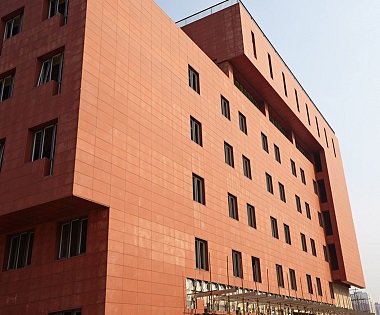
Historical archive: product availability, standards and event information may have changed. Contact LOPO for current specifications.Specifying a terracotta facade is only the beginning of a project. The design must be translated into suitable panel formats, approved colors and surfaces, coordinated fixing details, clear acceptance criteria, and a practical packing and delivery plan. LOPO manufactures architectural terracotta products in China and supports project teams through these product-related decisions. The aim is not to replace the architect, facade consultant, structural engineer, or installer, but to give them reliable information for coordinating the selected terracotta products.
A Facade Project Needs More Than a Product Name
The phrase terracotta panel covers many possible formats, surfaces, colors, edge conditions, and installation arrangements. A useful enquiry therefore begins with the building application rather than a general request for a price. Elevations, panel schedules, detail drawings, finish references, estimated quantities, and the delivery destination help define what needs to be reviewed.
Teams that are still comparing material options can start with LOPO’s architectural terracotta product overview. Projects already developed around a ventilated cladding system should use the terracotta facade panel page as the more relevant starting point.
What Terracotta Facade Project Support Can Cover
1. Reviewing the Product Brief
A product review should confirm the intended application, nominal dimensions, orientation, surface, color direction, quantity, corner conditions, and visible joint arrangement. Unusual lengths, narrow modules, special profiles, or demanding corner details may affect manufacturing, handling, and fixing. Identifying these points before samples are made can reduce avoidable revisions later.
2. Samples, Color Range, and Mock-Ups
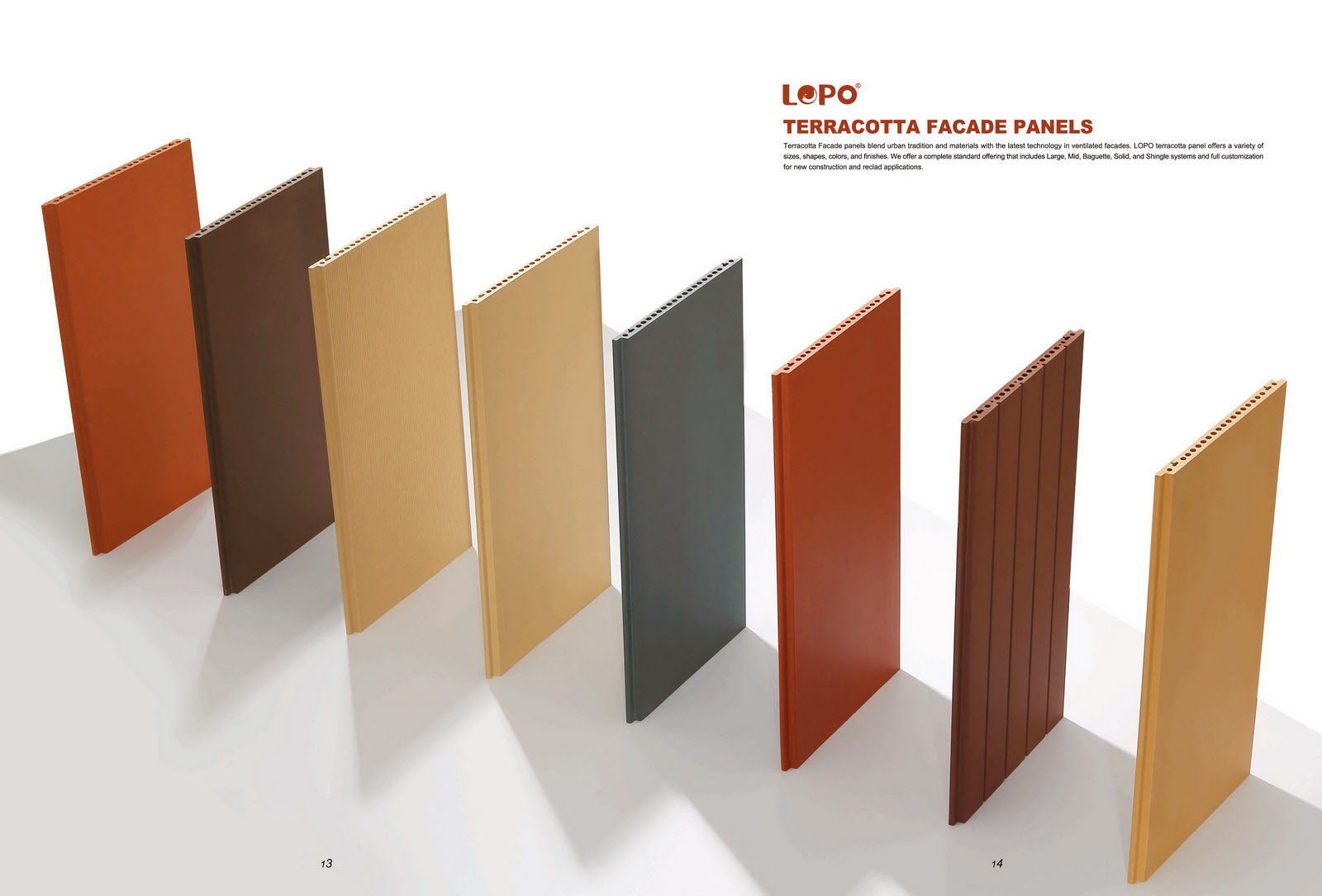
Terracotta is a fired clay product, so controlled tonal variation is part of its material character. A small sample can communicate color and texture, but it cannot fully represent the appearance of an entire elevation. The project team should agree on the reference sample, acceptable color range, viewing distance, joint color, lighting conditions, and any full-scale mock-up requirement. Glazed, natural-fired, textured, and project-specific surfaces should be approved separately when their acceptance criteria differ.
3. Coordination with the Fixing Design
Panel geometry and fixing design cannot be treated as unrelated decisions. The panel section, orientation, support points, joints, corners, openings, replacement access, and substructure must work together. LOPO can provide product information for coordination, while a qualified facade or structural engineer should determine project-specific loads, brackets, anchors, rail spacing, movement provisions, and compliance with local regulations. Projects using linear screening elements can also review the separate terracotta baguette and louver systems.
4. Production and Quality-Control Planning
Quality should be defined through measurable or observable acceptance criteria, not broad claims such as “high quality.” Before production, the parties should record the approved item, dimensions, finish, reference sample, color range, quantity, inspection method, and required documents. Test information must relate to the selected product and should not be assumed to apply automatically to every size, profile, finish, or facade assembly.
Information about LOPO’s production environment and process can be reviewed on the manufacturing and quality-control page. For a specific order, the project documents and approved samples remain the controlling references.
5. Packing and Delivery Coordination
Long, thin, textured, glazed, or specially shaped pieces may need different protection from standard panels. Packing should consider panel orientation, separation between pieces, edge protection, pallet handling, identification by elevation or batch, and the unloading method at destination. Shipping terms, transport responsibility, site access, storage conditions, and any spare quantity should be agreed before dispatch rather than after the goods are packed.
Responsibilities to Confirm Before Ordering
| Project decision | Information to confirm | Typical responsible parties |
|---|---|---|
| Material selection | Product type, color, surface, module, and visual intent | Architect, client, facade consultant |
| Engineering | Loads, substructure, anchors, joints, movement, and local compliance | Facade and structural engineers |
| Product development | Manufacturable section, samples, tolerances, and production references | Manufacturer with project team |
| Installation | Setting out, handling, access, sequencing, and replacement method | Facade contractor and installer |
| Logistics | Packing, labels, shipping terms, unloading, storage, and spares | Buyer, supplier, forwarder, and site team |
A Practical Project Workflow
- Send the design information. Include elevations, detail drawings, target appearance, estimated quantity, schedule, and destination.
- Clarify the product scope. Separate panels, baguettes, corner pieces, special profiles, and fixing-related items.
- Review feasibility. Resolve dimensions, profile geometry, finish, fixing interfaces, and handling concerns.
- Approve physical references. Record sample codes, color range, texture, glaze, and mock-up decisions.
- Confirm the order basis. Finalize quantities, documents, inspection points, packing, shipping terms, and delivery sequence.
Information to Send with an Enquiry
- Project country, building type, and facade application
- Drawings in PDF, CAD, or another readable format
- Panel or profile dimensions, including any corner conditions
- Target color, finish, texture, and reference images or samples
- Estimated quantity, required schedule, and delivery destination
- Known fixing concept and the facade consultant’s requirements
Frequently Asked Questions
Can LOPO complete the facade engineering?
LOPO can provide product information and coordinate manufacturing-related details. Project loads, anchors, brackets, substructure, movement joints, and local-code compliance should be designed and approved by qualified project engineers.
Is a small color sample enough for final approval?
It is useful for initial selection, but a larger sample set or project mock-up gives a better indication of tonal variation, joints, lighting, and the appearance of repeated panels across an elevation.
Can one test document cover every terracotta panel?
Not automatically. Results may depend on the product body, thickness, profile, dimensions, finish, test method, and date. The project team should confirm that each submitted document is relevant to the item being specified.
When should packing and spare pieces be discussed?
They should be considered before the order is finalized. Panel geometry, installation sequence, destination handling, replacement strategy, and site storage can all influence the appropriate packing and spare quantity.
Start with a Clear Project Brief
Good terracotta facade project support begins with clear information and clearly assigned responsibilities. To request a product review, sample discussion, or quotation, send the application, drawings, dimensions, finish, quantity, schedule, and destination through the LOPO project enquiry page.