Terracotta Panel Manufacturing Process and Equipment Boundaries
Follow the terracotta panel manufacturing process from clay preparation and batching through extrusion, drying, firing, inspection, finishing and packing.
Historical archive: product availability, standards and event information may have changed. Contact LOPO for current specifications.The terracotta panel manufacturing process turns variable clay feedstock into shaped and fired ceramic units through controlled preparation, forming, drying, firing, inspection, finishing, and packing. The photographs below come from LOPO’s 2015 article and are retained as historical process illustrations. They do not certify current equipment models, origins, line dimensions, storage capacity, cycle times, output, or feasible panel sizes.
Every production recipe and setting must match the clay blend, section, finish, colour range, geometry, and acceptance criteria. For a deeper explanation of material variability, use the clay, forming and firing evidence guide.
Manufacturing Process at a Glance
| Stage | Purpose | Evidence boundary |
|---|---|---|
| Clay receipt and storage | Identify, protect, and condition incoming materials | Source alone does not predict fired performance |
| Size reduction and blending | Prepare a controlled, repeatable feed | Recipe and particle targets are product-specific |
| Moisture conditioning | Create workable, homogeneous material | Moisture settings vary with body and process |
| Vacuum extrusion | Form the continuous panel section through a die | Machine origin does not prove output quality |
| Controlled drying | Remove moisture while managing distortion and cracking | Time and temperature depend on section and body |
| Firing | Develop the ceramic body and fired appearance | Kiln length or peak temperature alone proves nothing |
| Inspection and finishing | Check, classify, cut, edge, and identify units | Acceptance must follow the project specification |
| Packing and release | Protect traceable units for transport | Release records should match batch and destination |
1. Receive, Identify, and Condition the Clay
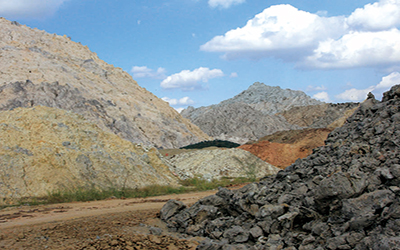
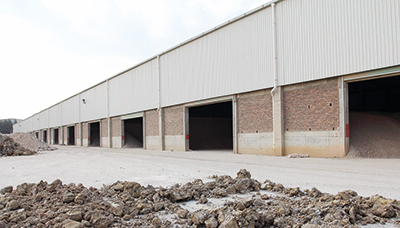
Incoming clays should be identified by source or lot, protected from contamination, and assessed against the manufacturer’s control plan. Outdoor weathering or aging may be part of a recipe, but a universal duration should not be copied from an old article. The objective is controlled material condition and more consistent downstream preparation, not a marketing claim that one source is automatically “best.”
2. Reduce, Blend, and Condition the Feed
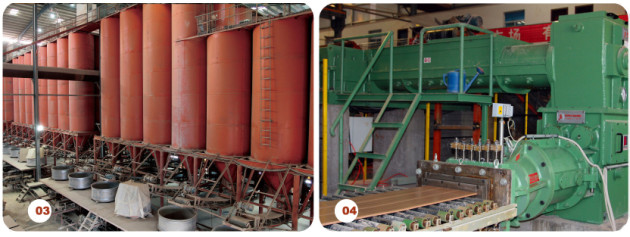
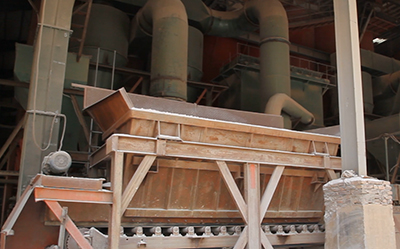
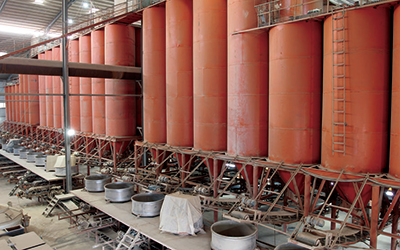
Prepared clay is size-reduced, screened where required, blended to a controlled recipe, and transferred through storage or dosing equipment. The process aims to manage particle distribution, composition, moisture, and batch consistency before forming. Equipment names, silo counts, storage tonnage, and automation level are not quality grades. Verify calibrated dosing, recipe control, lot identity, sampling, nonconformance handling, and change approval.
3. Form the Panel by Vacuum Extrusion
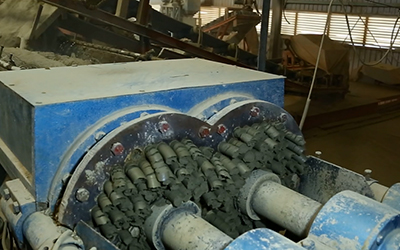
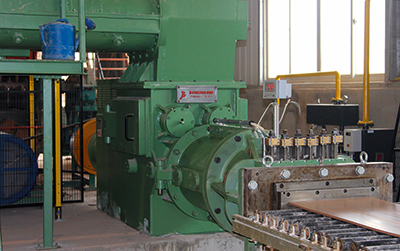
Conditioned clay enters an extruder, where de-airing and pressure help create a continuous section through a shaped die. The emerging profile is supported and cut to a controlled green length. Die design, wall sections, webs, surface treatment, moisture, extrusion pressure, cutting allowance, and green handling all influence the result. An imported machine or named origin does not establish dimensional accuracy, strength, or project suitability.
4. Dry the Green Units Gradually
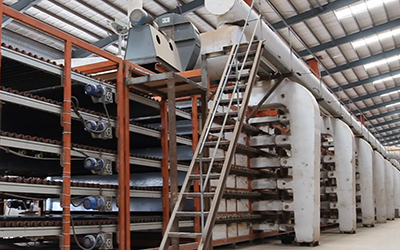
Freshly extruded units contain moisture and are vulnerable to distortion or cracking. A controlled dryer manages temperature, humidity, airflow, support, and residence time so moisture leaves at an appropriate rate. The correct schedule depends on clay body, section, length, loading, and ambient conditions. Dryer length, number of levels, or a stated cycle time must not be treated as a universal recipe.
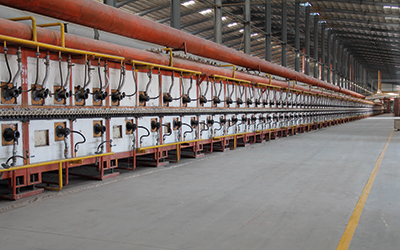
5. Fire the Dried Panels
Firing develops the ceramic body and influences colour, dimensions, absorption, strength-related characteristics, and surface appearance. Kiln zones, atmosphere, loading, heating and cooling rates, and product position must be controlled for the body and finish. A long kiln, high temperature, or fixed firing time does not guarantee performance. Required characteristics need applicable tests and evidence linked to the produced batch or qualified product family.
6. Inspect, Finish, Identify, and Pack
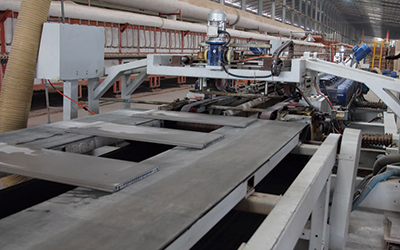
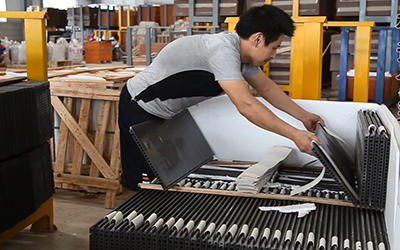
After firing, units are inspected and classified against documented criteria. Depending on the product, work may include cutting, edge treatment, drilling or machining, cleaning, finish review, labelling, and protective packing. The project specification should define dimensions, straightness, flatness, colour or texture range, visible defects, sampling, test scope, traceability, replacement references, and disposition of nonconforming units.
Separate Process Description from Factory Evidence
The old article named exact aging periods, storage quantities, equipment origins, dryer and kiln dimensions, cycle times, and output assumptions. These are retained only in the revision history, not as present capability. Before procurement or a factory audit:
- Request a dated process flow for the proposed product family.
- Match raw-material, recipe, forming, drying, and firing controls to batch identity.
- Review current equipment scope without treating brand or origin as a quality proxy.
- Agree inspection stages, acceptance criteria, sampling, tests, and release records.
- Confirm how changes, nonconformances, rework, substitutions, and traceability are controlled.
- Check capacity against product mix, yield, maintenance, quality holds, allocation, packing, and programme.
Use the manufacturing quality-control checklist to map every stage to records. The LOPO company overview explains broader products and project support, while the factories page is the route for current facility information.
Frequently Asked Questions
Does every terracotta panel follow the same recipe?
No. Clay blend, moisture, die, section, surface, drying, firing, finishing, and acceptance controls vary by product.
Does a larger or longer kiln produce better panels?
No. Equipment dimensions do not prove controlled firing, yield, consistency, tested characteristics, or project compliance.
Why is vacuum extrusion used?
It forms a continuous section and can reduce entrapped air, but die design, feed condition, controls, and downstream processing determine the result.
How can a buyer verify the current process?
Request dated process maps, product and batch identity, control records, calibration and maintenance status, inspection results, tests, change control, and traceability.
Request Process Evidence for a Defined Product
Send the proposed profile, dimensions, orientation, finish, quantity, project standards, acceptance criteria, programme, and destination through the LOPO contact page. Current feasibility and process evidence can then be matched to the actual project product.