Terracotta Panels vs Ceramic Cladding Tiles: Guide
Compare terracotta panels vs ceramic cladding tiles by geometry, fixing, joints, loads, evidence, samples, maintenance and procurement boundaries.
Historical archive: product availability, standards and event information may have changed. Contact LOPO for current specifications.Terracotta panels vs ceramic cladding tiles is a useful comparison only after both products and their wall assemblies are defined. The old phrase “traditional ceramic plate” can refer to very different solid tiles, porcelain slabs, mechanically fixed plates, or bonded finishes. A terracotta facade panel may be a hollow extruded rainscreen unit, but not every fired-clay product has that geometry or fixing method. Compare coded products and complete proposed systems rather than generic material labels.

Define Both Candidates Before Comparing
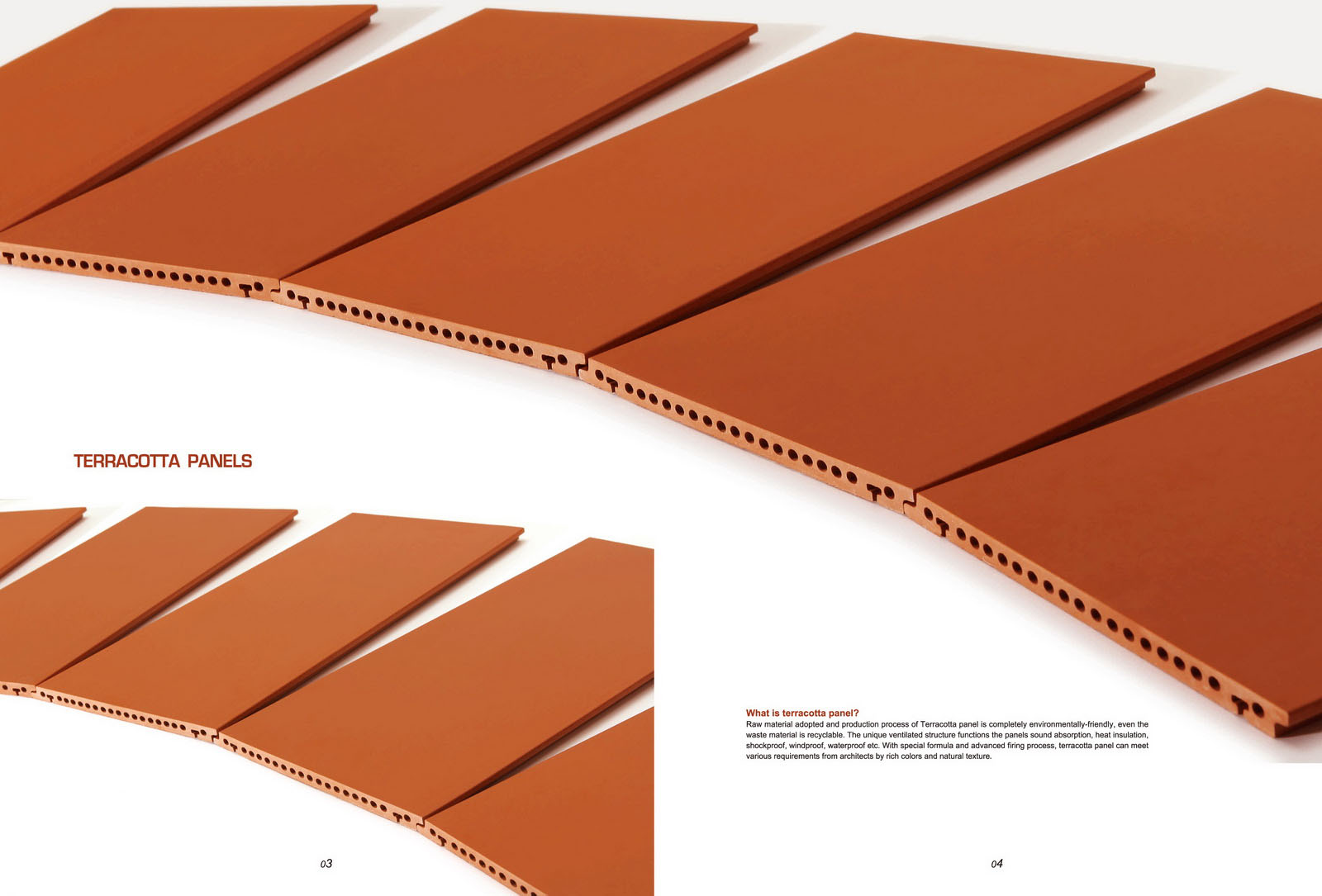
A hollow terracotta facade panel is commonly formed by extrusion and used as an outer cladding layer on an engineered substructure. Its section can include internal cavities and interfaces for clips or other supports. Panel module, orientation, joints, rails, brackets, anchors, cavity, weather layers, insulation, and backing wall all contribute to the assembly.
“Ceramic cladding tile” is broader. A candidate may be a smaller solid tile, a large-format porcelain unit, or another ceramic product designed for adhesive or mechanical installation. Obtain a current drawing and installation specification before deciding that two products are equivalent.
LOPO’s terracotta facade panel range provides examples of one product family. The terracotta panel selection matrix helps separate hollow panels, solid tiles, finishes, and open screening elements.
Terracotta Panel and Ceramic Tile Decision Matrix
| Decision area | Questions for the terracotta panel | Questions for the ceramic tile or plate |
|---|---|---|
| Product form | Is it hollow or solid, and what profile, orientation, module, and edge geometry apply? | Is it a tile, slab, plate, cassette, or reinforced product, and what exact section is supplied? |
| Attachment | Which clips, rails, brackets, anchors, pads, joints, and movement provisions are proposed? | Is it bonded, undercut, kerf-fixed, clipped, framed, or supported by another documented method? |
| Loads and spans | What unit properties, support spacing, wind actions, impact zones, and design checks apply? | What format, thickness, support points, edge distances, loads, and substrate limits apply? |
| Water management | How do open joints, cavity drainage, ventilation, flashings, and backing layers work together? | How do joints, sealants where used, drainage, adhesive or support system, and backing wall manage water? |
| Appearance | What fired colour range, texture, profile, glaze, joint rhythm, and corner solution are approved? | What surface, print, glaze, gloss, calibration, joint, cut edge, and batch range are approved? |
| Evidence | Do reports match the selected body, profile, thickness, orientation, fixing, and project criterion? | Do reports match the exact tile or plate, size, thickness, mounting, substrate, and exposure? |
| Maintenance | Can units, clips, rails, cavity, joints, and drainage paths be inspected and replaced? | Can units, bonds or fixings, joints, backing, seals, and damaged edges be accessed and repaired? |
Do Not Compare Raw-Material Slogans
The 2014 source claimed that one product used pure natural clay while the other contained quartz and additional materials, then inferred water absorption, strength, cost, and quality from those descriptions. That is not a reliable comparison. Fired ceramic bodies may use different clays, minerals, additives, forming processes, and firing schedules.
Ask each supplier for the declared product composition where relevant, current technical data, applicable reports, and manufacturing tolerances. Do not infer that “natural,” “pure,” “high-tech,” or “traditional” makes one option stronger, safer, greener, or more durable. For a broader material-neutral framework, use the facade cladding material comparison criteria.
Compare Complete Wall Assemblies
Neither visible unit independently establishes structural, water, air, thermal, acoustic, fire, or durability performance. Compare wall sections through bases, parapets, corners, openings, soffits, movement joints, and transitions. Include the substrate, anchors, subframe, cavity, insulation, membranes, flashings, joints, and installation tolerances for each option.
Weight should come from current drawings and schedules for the exact unit and attachment system; avoid generic kilograms-per-square-metre claims. Design loads, support capacity, anchor selection, movement, and local compliance require qualified project professionals. The early-stage terracotta versus other facade materials brief helps teams align the function and boundaries before requesting prices.
Request Comparable Evidence
- Current coded drawings showing dimensions, thickness, section, tolerances, edges, and attachment interfaces
- Product reports that identify the tested specimen, standard, edition, date, laboratory, result, and limitations
- System calculations and details for loads, supports, anchors, movement, water management, and interfaces
- Installation instructions covering substrate, setting out, cutting, handling, joints, inspection, and replacement
- Maintenance guidance for the selected surface, exposure, access method, approved cleaning, and spare units
- Environmental information with compatible declared units, system boundaries, dates, and verification status when required
Water absorption or freeze-thaw results should never be transferred from a different body, thickness, profile, finish, or production source. Fire classifications and fixing tests likewise need a clear relationship to the proposed product and assembly.
Approve Appearance at the Right Scale
Begin with identified samples from both candidates, then review representative ranges rather than one ideal piece. Compare colour, gloss, texture, relief, flatness expectations, edges, joints, cut pieces, corners, and cleaning under relevant light.
A useful mock-up includes the actual support or bedding method, joint width and depth, adjacent materials, critical interface, and intended workmanship. Record sample IDs, drawing revisions, accepted variation, review conditions, comments, and approval date. A digital rendering is not the controlling material reference.
Compare Procurement and Site Work
- Freeze comparable facade zones, quantities, special pieces, and performance criteria.
- Request equivalent supply scopes, components, tests, samples, mock-ups, packing, spares, and delivery terms.
- Compare production feasibility, tooling, cutting, batch planning, lead time, transport, storage, lifting, and installation sequence.
- Define responsibility for engineering, substrates, anchors, subframes, adhesives where used, seals, quality checks, and local approval.
- Confirm how damage, shortages, replacements, and future colour matching will be handled.
Frequently Asked Questions
Are terracotta panels and porcelain tiles the same?
No. Both are ceramic materials, but body, forming, section, format, surface, attachment, evidence, and intended wall role can differ substantially.
Which option has lower water absorption?
Do not assume from the category name. Compare current results for the exact products using relevant methods and project criteria.
Which cladding is lighter or easier to install?
Compare the complete proposed assemblies, unit formats, supports, substrate, access, cutting, handling, tolerances, and sequence. There is no universal answer.
Can one product test approve the complete facade?
No. Product evidence is one input; the project still needs system design, interface coordination, engineering, workmanship controls, and local compliance.
Build a Like-for-Like Enquiry
Define both candidates before asking which is better. Send the facade role, elevations, sections, product formats, support concepts, appearance, evidence criteria, quantities, location, and programme through the LOPO project enquiry page. The response can then be compared with the ceramic alternative on matching technical and commercial boundaries.