Types of Rainscreen Cladding by Water-Control Strategy
Compare rainscreen cladding types by water-control strategy, pressure moderation, cavity drainage, ventilation, joints, backing wall and verification.
Historical archive: product availability, standards and event information may have changed. Contact LOPO for current specifications.Types of rainscreen cladding are most usefully compared by water-control strategy, not by panel material alone. Terracotta, metal, stone, fibre cement, and other outer claddings can participate in different assemblies. The important questions are how much rain the outer layer deflects, what passes through joints, how the cavity drains, where the air and water barrier sits, whether pressure moderation is intended, and how openings, fire barriers, and interfaces are verified.

Use Terminology Carefully
Rainscreen terms vary across standards, markets, consultants, and manufacturers. “Drained,” “vented,” “back-ventilated,” “pressure-moderated,” and “pressure-equalized” should not be treated as interchangeable without a defined wall section and performance basis. State the intended functions and components instead of relying on the category name.
A face-sealed or barrier wall is a useful comparison baseline, but many specialists would not call it a rainscreen. It aims to resist water at the outer face and sealed joints. A rainscreen generally anticipates some water passing the outer layer and manages it using a cavity, flashings, drainage, and a separate backing-wall control layer.
Compare the Main Water-Management Strategies
| Strategy | Core principle | Key verification questions |
|---|---|---|
| Drained cavity rainscreen | Outer cladding deflects rain; water entering joints drains behind it | Are flashings, laps, outlets, membranes, and interfaces continuous? |
| Drained and vented rainscreen | Drainage is combined with limited venting or pressure relief | Where are openings, and what blocks or divides the cavity? |
| Drained and back-ventilated rainscreen | Defined lower and upper openings support airflow behind the cladding | Are free area, continuity, fire barriers, meshes, and moisture assumptions coordinated? |
| Pressure-moderated rainscreen | Cavity pressure is managed to reduce pressure across the outer joints | How are air tightness, compartment size, vents, joints, and wind zones established? |
| Pressure-equalized rainscreen | A more specific pressure response is targeted through compartmented cavities and controlled leakage paths | What definition, calculation, mock-up, test method, and acceptance criteria govern the claim? |
These strategies form a design spectrum rather than five universally separate products. A project can also use different strategies at different elevations or details. The contract documents should identify the intended behaviour for each zone.
Do Not Classify the System by Material Alone
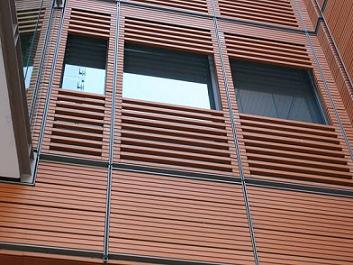
Open-jointed terracotta panels do not automatically create a pressure-equalized wall. Metal panels do not automatically create a sealed barrier. Stone, brick, or ceramic appearance says little about membranes, cavity divisions, flashings, joint leakage, or air tightness. Classify the complete assembly shown in sections and details.
- Outer layer: material, panel shape, open or baffled joints, laps, sealants where used, and tolerances.
- Cavity: depth, continuity, drainage, ventilation, compartments, obstructions, and maintenance access.
- Control layers: air barrier, water-resistive layer, vapour control, insulation, and continuity at penetrations.
- Support: clips, rails, brackets, anchors, thermal bridges, movement, and corrosion environment.
- Interfaces: windows, doors, bases, parapets, roofs, corners, balconies, soffits, and material transitions.
Understand Pressure Moderation Without Overpromising
Wind creates changing pressures across a facade. A compartmented cavity with appropriate vents and a sufficiently airtight backing wall may reduce pressure differences across outer joints under defined conditions. The response depends on wind direction and duration, facade zone, joint leakage, vent area, cavity volume, compartment boundaries, internal leakage, geometry, and construction tolerances.
Pressure equalization is not a guarantee that no water enters the cavity. Drainage and a continuous water-control layer remain important. If the project makes a pressure-performance claim, define the reference standard, calculation or test method, specimen, wind sequence, instrumentation, acceptance criteria, and permitted leakage paths.
Separate Ventilation from Pressure Control
Back ventilation and pressure moderation can interact, but they are not the same objective. Ventilation describes airflow paths intended to support drying, heat transfer, or another defined function. Pressure moderation describes pressure response across the outer cladding. Openings sized or located for one purpose may not satisfy the other, and fire barriers or insect screens can affect both.
The terracotta ventilated facade cavity guide addresses drainage, airflow, membranes, thermal bridges, fire compartmentation, and moisture review in detail.
Select a Strategy from Project Conditions
- Define climate, wind-driven rain, facade height and zones, orientation, geometry, and critical occupancies.
- Establish the backing wall, air tightness, water layer, insulation, structure, and permitted cavity depth.
- Identify outer-cladding joints, likely water entry, drainage routes, discharge points, and maintenance constraints.
- Coordinate fire barriers, compartmentation, openings, meshes, rails, brackets, and adjacent facade systems.
- Choose the terminology and performance basis supported by the drawings rather than marketing language.
- Set calculations, samples, mock-ups, tests, inspections, and acceptance criteria appropriate to project risk.
Verify the Complete Assembly
Water testing should represent critical joints, interfaces, openings, corners, support penetrations, and construction sequence. Air-barrier tests may be needed separately. A successful typical-bay test does not automatically approve parapets, bases, windows, balconies, or transitions that were not represented.
For a terracotta assembly, the terracotta panel rainscreen coordination guide covers panels, clips, rails, brackets, drainage, support grids, interfaces, submittals, and installation. The terracotta technical-data guide helps separate panel evidence from complete-system evidence.
Frequently Asked Questions
Are there only two types of rainscreen cladding?
No universal list applies everywhere. A useful spectrum includes drained, vented, back-ventilated, pressure-moderated, and more specifically defined pressure-equalized strategies. Use the governing standard’s terminology.
Is an open-joint facade pressure equalized?
Not automatically. Pressure response depends on joint leakage, vents, cavity compartments, air-barrier tightness, wind zones, geometry, and verification under a defined method.
Does pressure equalization eliminate drainage?
No. Water can still enter the outer layer. The cavity, flashings, control layers, interfaces, and discharge paths should manage it safely.
Which rainscreen type is best?
There is no universal best type. Select a strategy that fits exposure, backing wall, geometry, fire design, interfaces, workmanship, testing route, maintenance, cost, and local requirements.
Turn the Classification into a Project Brief
Send the location, exposure, wall sections, joints, cavity, backing construction, membranes, insulation, fire strategy, interfaces, standards, intended classification, testing, programme, and destination with the LOPO terracotta panel range through the project enquiry page. The responsible design team should confirm the final water-management strategy.