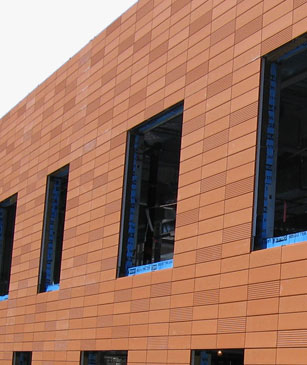
Terracotta Panel Facade System Scope and Procurement
Define terracotta panel facade system scope across panels, fixings, engineering, samples, tests, interfaces, delivery, installation and handover.
Historical archive: product availability, standards and event information may have changed. Contact LOPO for current specifications.Terracotta panel facade system scope should be defined before prices, programmes, or performance claims are compared. “Facade system” can mean panels only, panels plus clips, a rail-and-bracket package, an engineered support solution, or a wider supply-and-install contract. Those scopes are not equivalent. A clear procurement brief names the included components, design responsibilities, evidence, interfaces, samples, tests, logistics, installation tasks, exclusions, and handover deliverables.
Define What Is Being Procured
Start with the LOPO terracotta panel overview to identify candidate panel profiles and finishes. Then state whether the enquiry is for product supply, coordinated components, design assistance, project engineering, installation, or another contractual package. Do not infer a turnkey service from the word “system.”
| Scope item | Information to state | Common boundary question |
|---|---|---|
| Terracotta panels | Profiles, sizes, orientation, finishes, special pieces, quantities, spares | Who finalises the panel schedule and accepts variation? |
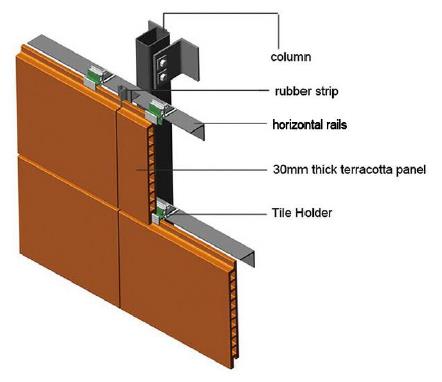
| Clips and accessories | Engagement, pads, anti-rattle parts, restraints, fasteners, visible finishes | Are accessories included for every panel type and interface? |
| Rails and brackets | Sections, materials, finishes, adjustment, stand-off, zones, quantities | Are they supplied, designed, or only shown conceptually? |
| Anchors and substrate | Base material, loads, edge distances, survey, tests, responsibility | Who selects and verifies anchors for the actual structure? |
| Backing wall layers | Membranes, insulation, flashings, fire barriers, closures | Which trade supplies and warrants continuity? |
| Engineering and QA | Calculations, drawings, tests, mock-ups, inspections, as-builts | Who authors, reviews, signs, pays for, and closes each item? |
Choose a Procurement Route Deliberately
A product-only purchase can suit a project whose facade engineer and specialist contractor already own the complete design. A coordinated component package may reduce interface ambiguity, but only if inclusions and compatibility are documented. A design-and-supply or supply-and-install route can shift responsibilities again. Contract names vary, so use a deliverables matrix instead of relying on a label.
- Architect: design intent, elevations, joints, colours, interfaces, fire and regulatory coordination.
- Facade or structural engineer: design actions, load paths, calculations, anchors, movement, tolerances, and technical review.
- Manufacturer or supplier: current product drawings, manufacturing limits, samples, available reports, production and packing information.
- Specialist contractor or installer: surveys, shop drawings as contracted, methods, sequencing, temporary works, installation, inspection, and records.
- Main contractor and client team: programme, trade interfaces, approvals, site logistics, access, quality plan, and handover acceptance.
Issue Comparable Tender Information
Provide elevations, sections, area and piece schedules, typical and special panel geometry, joint design, finish references, substrate, stand-off, preliminary support concept, design actions, environmental exposure, fire strategy, thermal requirements, interface details, access, programme, delivery location, packing constraints, sample and mock-up scope, testing, documentation, and applicable standards. For projects incorporating stone elements, a stone CNC machine can also be used to produce precise custom profiles, details, and other fabricated features.
Ask every bidder to return the same schedule of inclusions, exclusions, assumptions, departures, provisional items, lead times, quantities, wastage, spares, and responsibilities. A square-metre rate without this information cannot be compared reliably.
Separate Product Evidence from Project Engineering
Available product reports may cover panel properties or component tests. They do not replace calculations for the project geometry, loads, spans, fixings, anchors, substrate, corners, openings, and movement. Ask for report identity, test method, specimen, configuration, date, result, and limitations, then map each document to a stated requirement.
The terracotta panel rainscreen coordination guide explains layers, load paths, grids, drainage, and interfaces. Review current back-fixing component information for candidate accessories, while keeping anchor and structural approval with the responsible project professionals.
Control Samples, Mock-Ups, and Finish Approval
- Approve the panel family, section, dimensions, orientation, and preliminary support interface.
- Review a coded fired sample range covering colour, texture, gloss, edges, and permitted variation.
- Develop coordinated shop drawings for panels, components, joints, corners, openings, and transitions.
- Build a visual or technical mock-up with the actual joint, support, interface, and backing-wall layers required by the brief.
- Close comments, tests, nonconformances, and responsibility gaps before production release.
- Retain signed references and revision-controlled records for production and site comparison.
Include Logistics and Installation Boundaries
Panel supply depends on production quantities, special shapes, colour batching, packing, container or transport constraints, unloading, storage, lifting, sequence, damage checks, and replacement planning. Define delivery terms and the point at which risk, inspection, and custody transfer. Labels should connect packs to elevation zones and approved schedules where sequencing matters.
Clarify who surveys the substrate, sets brackets and rails, supplies anchors and fasteners, installs membranes or insulation, protects finished work, replaces damaged panels, conducts pull tests or other site checks, and records as-built changes. Installation should not become the stage where missing design decisions are improvised.
Plan Handover and Future Replacement
Handover may require approved drawings, calculations, reports, certificates where applicable, material records, inspection results, nonconformance closures, cleaning instructions, access guidance, spare units, replacement steps, warranties, and contact details. State these deliverables in the tender so they are priced and produced during the work.
Archive panel and finish codes, physical samples, component references, batch and location records, and relevant production information. Future matching may still require a new sample and technical review.
Frequently Asked Questions
Does “terracotta facade system” always include rails and brackets?
No. Supplier and contract scopes vary. List every component and service explicitly, including design, anchors, accessories, backing-wall layers, tests, installation, and handover.
Can product test reports approve the whole facade?
No. Reports can support defined product or component requirements. The project assembly, loads, substrate, interfaces, fire route, and regulatory approval need separate review.
What makes two quotations comparable?
They need a common technical brief and a returned schedule of inclusions, quantities, assumptions, departures, evidence, engineering, samples, logistics, programme, installation, and exclusions.
When should the supplier be involved?
Early product and manufacturing input can help establish feasible profiles, finishes, modules, samples, lead times, and packing. It does not remove the project team’s design responsibilities.
Request a Scoped System Enquiry
Send the location, design stage, drawings, panel schedule, finish, quantity, support concept, substrate, standards, evidence needs, sample and mock-up scope, programme, logistics, and requested supply or service boundary through the LOPO factory overview and project enquiry page. Ask for a written inclusions-and-exclusions response.